
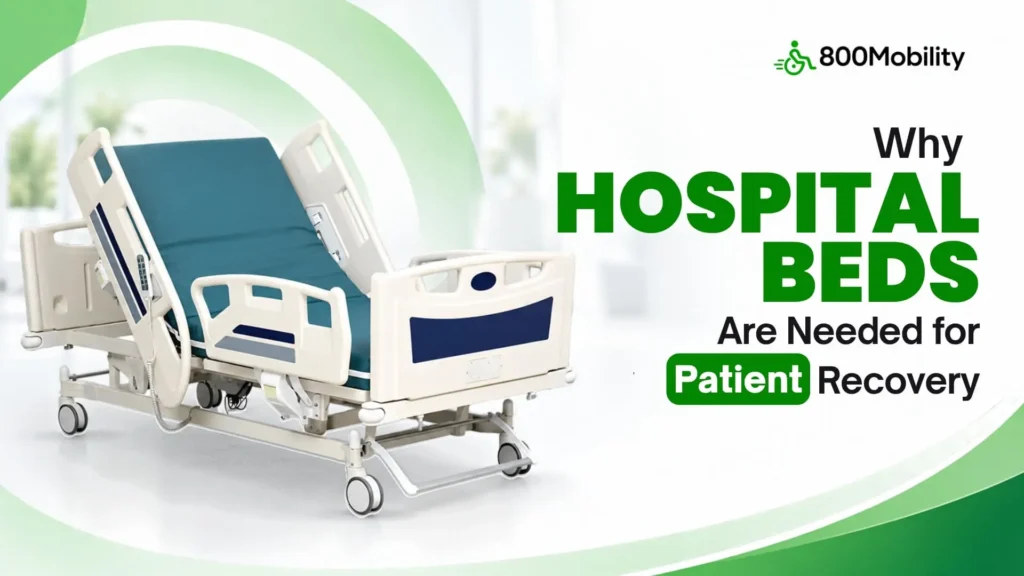
Recovering at home can be challenging when a standard bed does not provide the positioning, support, or accessibility a patient needs. Unlike ordinary beds, hospital beds offer adjustable features that can make it easier for patients to change positions, get in and out of bed, and receive care.
Hospital beds can be particularly useful for people recovering from surgery or injury, those with limited mobility, or patients who need to remain in bed for extended periods. However, not every patient requires a hospital bed. The right choice depends on the person’s condition, mobility, and level of care required.
How a Hospital Bed Supports Patient Positioning
Staying in the same position for long periods can be uncomfortable for patients during recovery. An adjustable hospital bed allows patients and caregivers to change the bed’s position to support greater comfort and easier access to everyday activities.
For example, the upper section of the bed can be raised to help a patient sit upright for meals. The same position may also make activities such as drinking, reading, watching television, or talking with others more comfortable.
Rather than requiring the patient to reposition their entire body, the bed’s adjustable sections can help achieve different positions with less physical effort. This can also make positioning easier for caregivers.
Easier Getting In and Out of Bed
People recovering from surgery or living with reduced mobility may find it difficult to get in and out of a standard bed. Fixed-height beds may make sitting at the edge of the bed or standing more challenging.
A hospital bed allows the height and backrest to be adjusted according to the patient’s needs. Lowering or raising the bed appropriately can make it easier for a patient to sit at the edge of the bed and prepare for a transfer.
Hospital beds can also support transfers between the bed and a wheelchair. Caregivers can adjust the bed height and position to reduce unnecessary reaching, bending, and physical strain.
For patients who have difficulty sitting independently, raising the backrest can help bring them into a more upright position. However, transfers should always be carried out according to the patient’s abilities and any instructions provided by a healthcare professional.
Making Patient Care Easier for Caregivers
Caring for someone at home can involve regular assistance with activities such as dressing, feeding, repositioning, and transfers. A hospital bed can make some of these tasks more manageable by allowing caregivers to adjust the patient’s position and the height of the bed.
For example, raising the backrest can place the patient in a more suitable position for eating or dressing. Adjusting the bed height can also help caregivers work at a more comfortable level instead of repeatedly bending or reaching.
These adjustable features can reduce the physical effort involved in routine care. They do not replace proper caregiving or nursing support, but they can make everyday patient care more practical and comfortable.
Improving Safety During Recovery
Patients with limited mobility or reduced strength may have difficulty maintaining their balance when changing positions or transferring from the bed. Appropriate hospital bed features can provide additional support during these activities.
Some hospital beds include side rails or other support features. Depending on the design and the patient’s needs, rails may provide a handhold or help with positioning. However, side rails are not appropriate for every patient and should be used according to professional guidance and the bed manufacturer’s instructions.
If a patient requires significant assistance with positioning, transfers, or other aspects of care, consult a healthcare professional. Caregivers should also understand how to operate the bed and use its safety features correctly.
Key Takeaway: Supporting a Safer and More Comfortable Recovery
A hospital bed can provide practical support when a standard bed does not meet a patient’s positioning, mobility, or care needs. Adjustable sections can help with everyday activities, repositioning, and transfers while also making some caregiving tasks easier.
When choosing a hospital bed, consider the patient’s mobility, the level of assistance required, and the features needed for safe and comfortable care.
If you need help choosing a hospital bed in the UAE, 800 Mobility can assist you in finding an option suited to your requirements. Contact 800 Mobility for guidance on hospital beds and other mobility equipment designed to support comfort, accessibility, and everyday care.