Bathrooms can present safety challenges, especially for seniors and People of Determination. Making a bathroom safer and more accessible can help users perform everyday tasks with greater comfort and independence. An accessible bathroom should provide enough space for a person to enter, move around, transfer safely, and use essential fixtures comfortably.
Accessibility improvements may include modifications to the toilet area, shower, shower seat, sink, vanity, flooring, storage, and entrance.
Start by Assessing Your Bathroom’s Accessibility
Before making any modifications, assess the bathroom to identify accessibility barriers. Consider whether the user can enter, move around, transfer to the toilet or shower seat, turn the wheelchair, and reach essential fixtures independently.
Pay particular attention to the doorway, available floor space, wet areas, and placement of bathroom fixtures. Consider the user’s mobility and level of assistance required when deciding which modifications are needed.
Make the Doorway Easier to Use and Move Through
A bathroom entrance should provide enough clearance for wheelchair access and movement. Sufficient space allows wheelchair users to reach the sink, shower, toilet, and other fixtures more easily.
Keep pathways clear of furniture, storage units, and other obstacles that may restrict wheelchair movement. Reducing unnecessary clutter can also provide more space for turning and maneuvering safely.
Make the Sink and Vanity Wheelchair Accessible
An accessible bathroom should also consider the sink and vanity. Make sure there is sufficient space around and underneath the sink so the wheelchair user can position themselves comfortably.
Place faucets and other controls where they can be operated easily from a seated position. Mirrors should also be positioned at a suitable height for seated users, while frequently used bathroom accessories should remain within easy reach.
Create a Safer and More Accessible Shower
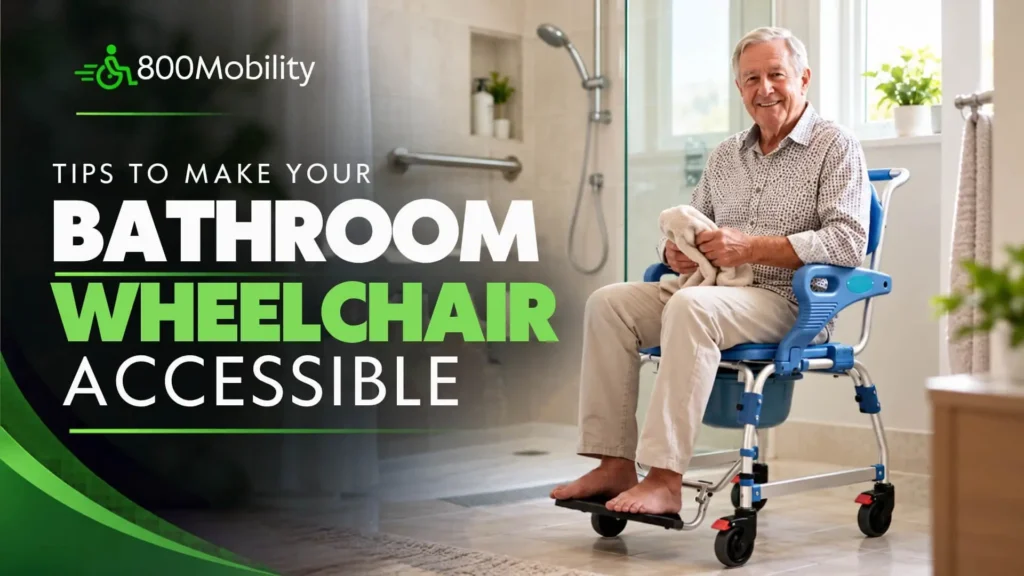
A low-threshold or barrier-free shower can make entering and exiting easier for wheelchair users and people with limited mobility. A shower seat provides a stable place to sit, while a handheld showerhead allows users to wash while seated.
Keep shower controls and shelves within easy reach to reduce excessive stretching or bending. Instead of placing toiletries on the floor, use accessible shelves or storage areas to keep them organized and easy to reach.
Install Grab Bars Where They Provide the Most Support
Grab bars can provide additional support near the shower and toilet, particularly during transfers. They should be securely installed and positioned according to the user’s balance, movement, and transfer needs.
Avoid relying on temporary fixtures that are not designed to provide reliable support.
Improve Toilet Accessibility
Ensure there is enough space around the toilet to allow for safe and comfortable wheelchair transfers. The placement of the toilet and other fixtures should take into account whether the user transfers from the left or right side.
Keep toilet paper and other frequently used accessories within comfortable reach. Grab bars can also be installed in suitable locations to provide additional support during transfers.
Choose Flooring That Reduces Slip and Trip Risks
Choose bathroom flooring that provides good traction and is suitable for wet conditions. Avoid surfaces that become excessively slippery when wet, as they can increase the risk of slips and falls.
For easier wheelchair movement, keep transitions between the bathroom and shower area as level as possible. Keep the floor clear of loose mats and other objects that could interfere with wheelchair movement.
Make Storage, Fixtures, and Controls Easy to Reach
Keep shelves, towels, hooks, grab bars, toilet paper holders, and other frequently used items at a comfortable height and within easy reach.
Avoid placing essential items where the user must bend, stand, or stretch excessively to access them. Frequently used controls, including lighting switches, should also be positioned where they can be operated easily.
Improve Bathroom Lighting and Visibility
Adequate lighting is important throughout the bathroom, particularly around the shower, toilet, sink, and entrance. Good lighting can improve visibility, reduce shadows, and help users move and transfer more safely.
Poor lighting may make it harder to identify obstacles or changes in floor level. Keep lighting switches and other controls simple to operate and within easy reach.
Decide Which Accessibility Improvements to Prioritize
Safety should be the first priority when making a bathroom accessible. Start by addressing potential hazards such as slippery floors, difficult shower entry, limited maneuvering space, and insufficient support.
Next, improve access to essential features such as the sink, toilet, shower controls, storage, and other frequently used items. Consider the user’s current and long-term mobility needs when deciding which modifications to make.
For help choosing suitable mobility and accessibility solutions, contact 800 Mobility. We provide mobility equipment and support for wheelchair users and people with limited mobility across the UAE.