Getting in and out of a vehicle can be challenging for many elderly people and those with limited mobility. Twisting, bending, and reaching into a car can cause discomfort and make transfers more difficult. A swivel seat can help simplify this process by bringing the seating surface closer to the vehicle door and making transfers more manageable.
How Swivel Seats Make Vehicle Transfers Easier
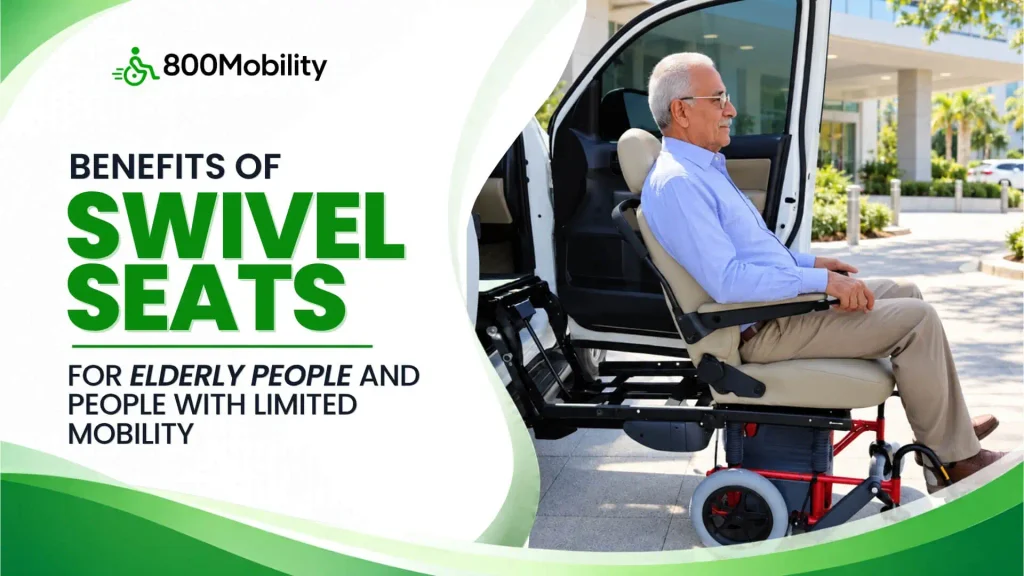
A swivel seat rotates toward the vehicle door, bringing the seating surface closer to a convenient transfer position. This allows the user to roll or slide sideways onto the seat instead of twisting and reaching into the vehicle. The seat can then rotate back into the vehicle, helping to make the transfer more controlled.
This can reduce the physical effort required from both the user and caregiver during vehicle transfers.
Benefits of Swivel Seats for Elderly and Mobility-Impaired Users
Easier Entry and Exit
A swivel seat moves toward the vehicle door, bringing the seating surface closer to the user. This can make it easier to sit down and get out of the vehicle without requiring excessive sideways movement, bending, or twisting.
By positioning the seat closer to the door, the user may have more space and a more accessible position for transferring between the wheelchair and vehicle seat.
Reduced Physical Strain During Transfers
Swivel seats can reduce the need for twisting and awkward movements when getting into or out of a vehicle. Instead of reaching deep into the vehicle, the user can transfer onto the seat while it is positioned closer to the door.
This can be particularly helpful for people with limited flexibility, reduced upper-body strength, or difficulty supporting their body weight during conventional vehicle transfers. Reducing unnecessary bending and twisting may make the transfer more comfortable and manageable for both the user and caregiver.
Greater Comfort and Stability
A controlled swivel seat transfer can reduce the amount of twisting, bending, and reaching required during entry and exit. Positioning the seat closer to the doorway and at a suitable height can make the transfer easier to manage.
Proper positioning and support are also important. The user should be correctly seated and supported before the seat is rotated back into the vehicle. Following the manufacturer’s instructions and using the swivel seat correctly can help provide a more controlled transfer for both the user and caregiver.
More Independence in Everyday Travel
Easier vehicle transfers may allow some users to require less physical assistance when getting into or out of a vehicle. Users who can transfer with minimal assistance may be able to complete more of the process themselves when the seat is positioned appropriately.
This can make everyday travel more manageable, including trips to medical appointments, shopping, family visits, and other activities outside the home.
Easier Assistance for Caregivers
Swivel car seats can help caregivers assist people who have difficulty with conventional vehicle transfers. By rotating toward the open door, the seat brings the user closer to the transfer point and reduces the need for deep reaching or twisting into the vehicle.
This can make the transfer process easier to manage, particularly when the person being transferred has limited mobility or strength.
What to Consider Before Choosing a Swivel Seat
Before choosing a swivel car seat, consider the following factors:
Vehicle Compatibility and Available Door/Seat Space
Not all swivel seats are compatible with every vehicle. Check the manufacturer’s compatibility specifications before purchasing a seat.
There should also be enough space for the swivel mechanism to operate correctly and for the user to transfer safely between the wheelchair and vehicle seat.
User’s Transfer Ability and Mobility Needs
Consider how the user normally gets into and out of the vehicle and how much assistance they require. A person who needs help with transfers may have different requirements from someone who can transfer independently.
Strength, balance, flexibility, and mobility should all be considered when selecting a suitable swivel seat.
Seat Height and Positioning
The seat should be positioned at a suitable height to support the user’s transfer needs. Consider whether the seat height and position allow the person to transfer without excessive bending or twisting.
Weight Capacity and Manufacturer Specifications
Check the manufacturer’s stated weight capacity and product specifications before purchasing a swivel seat. The seat should be suitable for the user’s weight and compatible with the intended vehicle application.
Using a swivel seat outside its specified limits may affect its safe operation.
Ease of Swivelling and Locking Mechanisms
Consider how easily the seat swivels and how the locking mechanism operates. The seat should be able to rotate smoothly and lock securely in the required position.
Always ensure that the seat is properly locked according to the manufacturer’s instructions before the vehicle is used.
Professional Installation Where Required
Some swivel seats may require professional installation or modifications to the vehicle. Check the manufacturer’s installation requirements before purchasing and ensure that the seat is installed according to the specified instructions.
Professional installation may be appropriate where required to ensure that the system is fitted correctly.
Key Takeaway: Making Vehicle Transfers Easier and More Comfortable
A properly used swivel seat can make getting into and out of a vehicle easier by bringing the seating surface closer to the door. It can reduce the need for twisting, bending, reaching, and other difficult movements, potentially making transfers more comfortable and manageable.
A swivel seat may also help reduce the amount of physical assistance required for some users, making it easier for caregivers and family members to provide support.
However, a swivel seat is not suitable for every person or vehicle. The user’s mobility, strength, flexibility, and transfer ability should be considered alongside the available space in the vehicle, seat position, vehicle make and model, and the specifications of the swivel-seat system.
Always check the manufacturer’s instructions for information about compatibility, use, weight capacity, installation, and safe operation.