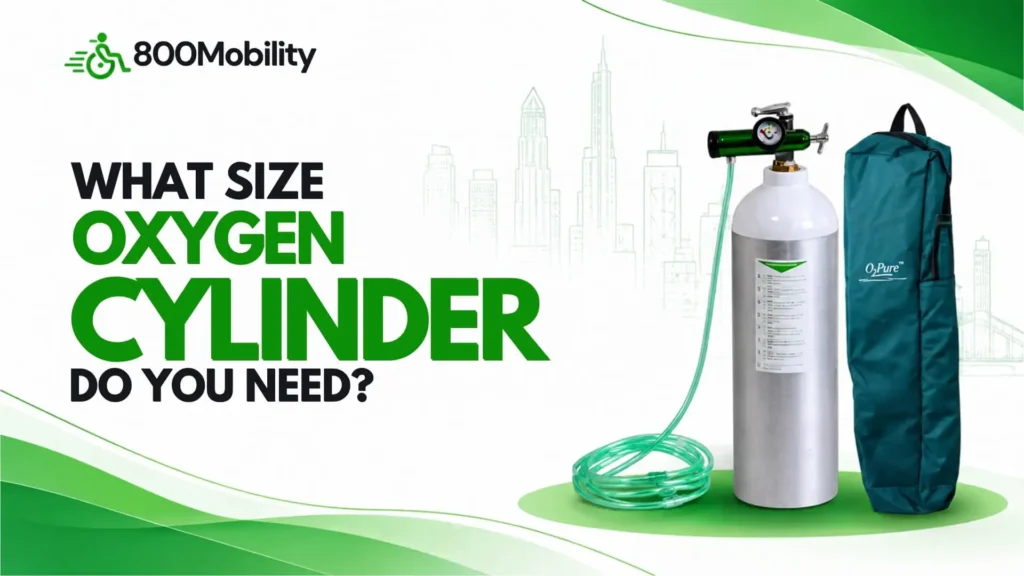
People with respiratory conditions may require supplemental oxygen at different flow rates and for varying durations. Choosing the right oxygen cylinder depends on the prescribed oxygen flow rate, how long oxygen is needed, and whether the cylinder must be portable.
This guide explains the differences between oxygen cylinder sizes and flow rates, how to estimate cylinder duration, and how to choose a suitable capacity for home use, travel, and everyday activities.
Oxygen Cylinder Size vs. Oxygen Flow Rate: What’s the Difference?
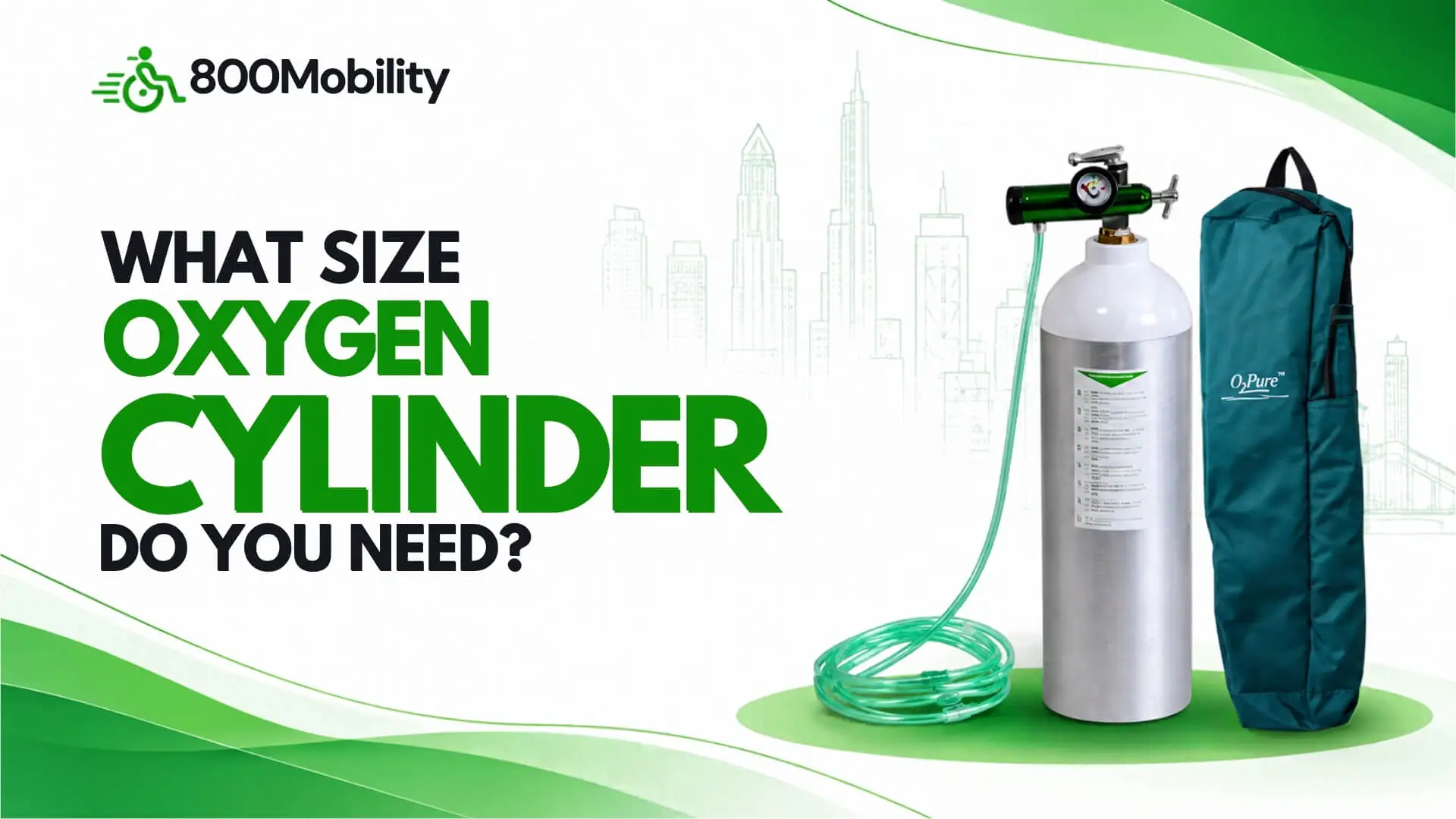
Oxygen cylinder size refers to its capacity to store compressed oxygen, while the oxygen flow rate measures how much oxygen is delivered to the user, usually in litres per minute (L/min).
Both factors affect how long a cylinder will last. A larger cylinder generally holds more oxygen, while a higher prescribed flow rate uses the available supply more quickly.
If you or a loved one requires long-term oxygen therapy, consider the expected duration of use when choosing a cylinder. Always follow the flow rate prescribed by a healthcare professional. Do not reduce or adjust the flow rate to extend cylinder life, as this could compromise the user’s oxygen supply.
Common Oxygen Cylinder Sizes and Their Uses
Oxygen cylinders are available in different capacities to suit various needs. The most suitable option depends on the required oxygen supply, frequency of use, and portability requirements.
Small Oxygen Cylinders
Small oxygen cylinders are generally easier to carry and may be suitable for short outings, medical appointments, and other activities away from home. Their limited capacity means they may need more frequent replacement or refilling, depending on usage.
Medium Oxygen Cylinders
Medium-sized oxygen cylinders offer a balance between capacity and portability. They may be suitable for users who need a longer oxygen supply while retaining some flexibility to move between locations.
Large Oxygen Cylinders
Large oxygen cylinders typically hold more oxygen and are often better suited to stationary use at home or in other fixed locations. They may be appropriate for users who require oxygen for extended periods, provided the cylinder meets their prescribed oxygen needs.
The exact capacity, dimensions, and weight vary by cylinder model and supplier. Compare these specifications before choosing a cylinder that fits your oxygen requirements and daily routine.
How Long Will an Oxygen Cylinder Last?
An oxygen cylinder’s operating time depends on its capacity, the pressure of the oxygen remaining inside, and the prescribed flow rate. In general, a cylinder with more available oxygen lasts longer, while a higher flow rate reduces its operating time.
A basic estimate can be calculated using the following formula:
Estimated duration (minutes) = Available oxygen (litres) ÷ Prescribed flow rate (L/min)
For example, if a cylinder contains 600 litres of usable oxygen:
- At 1 L/min, the estimated duration is 600 minutes, or 10 hours.
- At 2 L/min, the estimated duration is 300 minutes, or 5 hours.
- At 3 L/min, the estimated duration is 200 minutes, or approximately 3 hours and 20 minutes.
These figures are illustrative and assume the stated oxygen volume is fully usable. Actual operating time may be shorter because of residual pressure, regulator requirements, cylinder specifications, and other equipment factors.
For a more accurate estimate, check the cylinder manufacturer’s specifications and ask your oxygen supplier or healthcare professional to confirm the expected duration. Always allow for an adequate safety margin rather than relying on the theoretical maximum.
Which Oxygen Cylinder Size Is Right for Home Use?
Choosing an oxygen cylinder for home use involves balancing oxygen requirements, available space, and ease of handling.
Consider the following factors:
- Frequency and duration of use: Estimate how long oxygen is needed each day and whether one cylinder can provide a suitable supply.
- Continuous or intermittent use: Consider whether oxygen is prescribed for continuous use or specific periods throughout the day.
- Available storage space: Choose a cylinder that fits safely in the designated storage area and can be secured according to the manufacturer’s instructions.
- Backup supply: Consider whether a spare cylinder is needed to maintain access to oxygen if the primary supply runs out or becomes unavailable.
- Ease of movement: If the cylinder needs to be moved around the home, consider its weight, dimensions, and compatibility with an appropriate trolley.
For extended oxygen use, a larger stationary cylinder may be practical. If you need to move around the home frequently, a smaller cylinder may offer greater convenience. Your healthcare professional or oxygen supplier can help you assess the most suitable arrangement.
Choosing a Portable Oxygen Cylinder for Travel and Daily Activities
If you need oxygen outside the home, portability is an important consideration. A cylinder’s weight and physical dimensions can matter as much as its capacity, particularly when travelling or attending appointments.
Consider a portable oxygen cylinder for activities such as:
- Attending medical appointments.
- Taking short outings.
- Travelling by car.
- Moving between different locations.
Before choosing a portable cylinder, consider how long you will be away from your primary oxygen supply and the flow rate prescribed for that activity. The cylinder must provide enough oxygen for the expected duration, including reasonable allowances for delays.
Check whether you can carry or transport the cylinder safely and whether you need a suitable carrying case or trolley. For vehicle travel, follow the manufacturer’s transport instructions and secure the cylinder properly.
Portable oxygen requirements should always be assessed in line with your prescribed oxygen therapy. Confirm the expected operating time and suitability of the equipment with your healthcare professional or oxygen supplier before travelling.
How to Choose the Right Oxygen Cylinder Capacity
Choosing the right oxygen cylinder involves assessing your oxygen requirements, expected usage time, and practical needs.
Follow these steps:
- Confirm your prescribed flow rate: Check the oxygen flow rate recommended by your healthcare professional.
- Determine how long oxygen is needed: Consider daily usage, including any time spent outside the home.
- Estimate the required cylinder duration: Use the cylinder’s usable oxygen capacity and prescribed flow rate to estimate operating time.
- Assess portability needs: Decide whether you need a stationary cylinder, a portable option, or both.
- Choose a suitable capacity and size: Compare oxygen capacity, weight, dimensions, and ease of handling.
- Plan a backup supply: Consider how to maintain access to oxygen if your primary cylinder runs out or becomes unavailable.
The right oxygen cylinder should provide a suitable oxygen supply while fitting your lifestyle and storage requirements. Always follow your prescribed oxygen flow rate and consult a healthcare professional or oxygen supplier when selecting cylinder capacity.