People with certain respiratory conditions may need supplemental oxygen to maintain adequate blood oxygen levels. An oxygen concentrator is a medical device that helps provide this oxygen by filtering the surrounding air and concentrating its oxygen content.
In this article, we explain what an oxygen concentrator is, how it works, its main components, and who may need one.
What Is an Oxygen Concentrator?
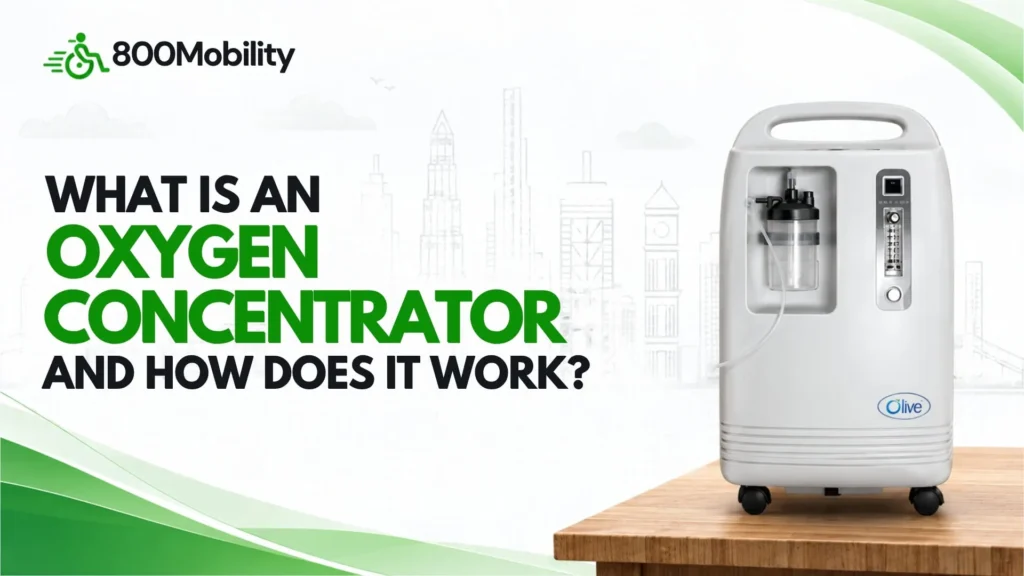
An oxygen concentrator is a medical device that draws in ambient air, removes most of its nitrogen, and delivers concentrated oxygen to the user. Oxygen is typically delivered through tubing and a nasal cannula or another prescribed interface.
Unlike oxygen cylinders, which store a limited supply of compressed oxygen, oxygen concentrators produce concentrated oxygen from the surrounding air while operating.
How Does an Oxygen Concentrator Work?
Most conventional stationary oxygen concentrators use a technology called Pressure Swing Adsorption (PSA) to separate nitrogen from the air. The process involves three main steps.
Step 1: Drawing In and Filtering Air
The concentrator draws in ambient air using an internal compressor. Before the air enters the concentration system, it passes through filters that remove dust and other airborne particles. This helps protect the device’s internal components and maintain proper operation.
Step 2: Separating Nitrogen from Oxygen
After filtration, the compressor pressurises the air and directs it into one of two molecular sieve beds, which typically contain a material called zeolite.
- Nitrogen adsorption: Under pressure, the zeolite material selectively adsorbs nitrogen, allowing oxygen-enriched gas to pass through.
- Alternating sieve beds: The concentrator alternates between the two beds. While one bed separates nitrogen from the incoming air, the other releases the accumulated nitrogen as the pressure decreases. This process regenerates the sieve material and allows the system to continue producing concentrated oxygen.
Step 3: Delivering Concentrated Oxygen
The oxygen-enriched gas passes into a reservoir before moving through a flow-control system. The device delivers oxygen at the prescribed setting through tubing and a nasal cannula or another suitable interface.
Two important factors to understand when using an oxygen concentrator are oxygen concentration and flow rate:
- Oxygen concentration: The percentage of oxygen in the delivered gas. Many conventional concentrators provide an oxygen concentration of approximately 90–95%, depending on the model and operating conditions.
- Flow rate: The volume of oxygen delivered per minute, typically measured in litres per minute (L/min).
Increasing the flow rate does not necessarily increase oxygen concentration. Both the concentration and flow rate depend on the device’s specifications and operating conditions. Always follow the prescribed oxygen settings and the manufacturer’s instructions.
What Are the Main Components of an Oxygen Concentrator?
An oxygen concentrator contains several components that work together to produce and deliver concentrated oxygen.
| Component | Function |
| Air intake filter | Removes dust and other airborne particles from incoming air. |
| Compressor | Pressurises the incoming air for the separation process. |
| Molecular sieve beds | Separate nitrogen from the air to produce oxygen-enriched gas. |
| Oxygen reservoir | Temporarily stores concentrated oxygen before delivery. |
| Flow meter or flow-control system | Regulates the oxygen delivery rate. |
| Outlet and tubing | Transport oxygen to the user. |
| Alarm system | Alerts the user to certain operating issues, depending on the model. |
Who Needs an Oxygen Concentrator?
An oxygen concentrator may be prescribed for people with low blood oxygen levels who require supplemental oxygen. This may include individuals with certain respiratory or other medical conditions, such as:
- Chronic obstructive pulmonary disease (COPD)
- Certain chronic lung diseases
- Some heart conditions associated with low blood oxygen levels
- Other conditions that affect oxygen levels in the blood
The need for oxygen therapy, the appropriate delivery method, and the prescribed flow rate should be determined by a qualified healthcare professional. An oxygen concentrator is not necessary for everyone with a respiratory condition, and it should only be used according to medical guidance.
Find an Oxygen Concentrator in the UAE
Choosing a suitable oxygen concentrator involves considering your prescribed oxygen requirements, the device’s specifications, and whether a stationary or portable model is appropriate for your needs.
At 800 Mobility, we provide mobility and medical equipment solutions in the UAE to support everyday comfort and independence. Contact our team to learn more about available oxygen concentrators and find an option that aligns with your requirements.