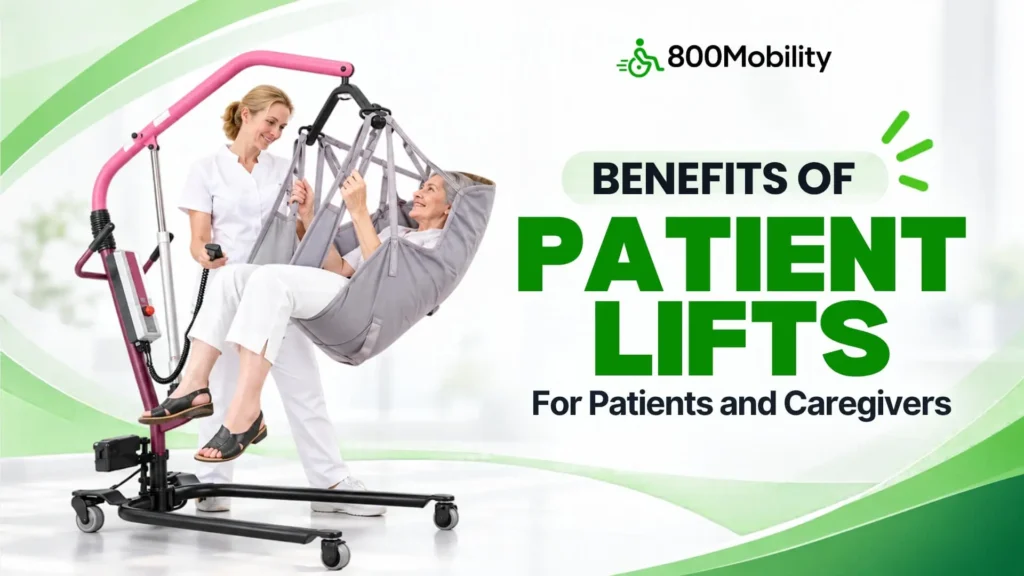
Not all transfers are safe or comfortable, especially when moving from a bed to a chair or helping someone rise from a seated position. Patient lifts and slings can provide support during these transfers, making them easier and more manageable for both patients and caregivers. 800 Mobility offers a range of patient lifts and slings designed to support assisted transfers.
Greater Convenience for Patients and Caregivers
Patient lifts can assist with transfers that might otherwise require a caregiver to manually lift or support a person. This can make transfers easier while reducing the physical effort required from caregivers and patients.
For a patient lift to be used effectively, the appropriate equipment, sling, and transfer technique must be selected for the individual’s needs. Patient lifts should be used according to professional guidance and do not replace the advice of a qualified healthcare professional.
Improved Patient Comfort and Transfer Safety
A patient lift and properly fitted sling can provide support and stability during transfers while reducing the physical effort involved. The sling helps support the patient’s body and maintain appropriate positioning as they are moved from one location to another.
For individuals who cannot stand or move independently, a suitable lift can provide additional support and help make transfers more comfortable and controlled for both the patient and caregiver.
Making In-Home Care More Accessible
Patient lifts can be useful in home-care settings by assisting with transfers and reducing the need for caregivers to physically support a patient’s full weight. This can make routine movement around the home more manageable.
When installing or using a patient lift at home in the UAE, it is important to ensure that there is sufficient space for the equipment and that caregivers understand how to operate it safely.
Easier Movement Between Rooms and Care Areas
Patient lifts can assist with transfers between different areas of the home, such as from a bedroom to a living area, from a chair to a wheelchair, or from a bedroom to a bathroom, when the equipment and environment are suitable.
Before using a lift, caregivers should consider the planned transfer route, available space, doorways, flooring, and whether the lift is appropriate for the intended location. Proper planning can help make regular transfers more manageable and reduce the physical effort required.
Supporting Rehabilitation and Assisted Movement
Patient lifts may provide assisted support during rehabilitation or mobility training when recommended by an appropriate healthcare professional. For patients who cannot fully bear their own weight or are working toward improved weight-bearing ability, certain lift systems may provide support during standing or walking activities.
This type of assisted movement is intended to complement, rather than replace, a rehabilitation program. The appropriate lift, sling, and transfer technique should be selected based on the patient’s needs and professional recommendations.
Safer Bathroom and Toilet Assistance
Bathroom and toilet transfers can be particularly challenging for people with limited mobility. A suitable patient lift, including a ceiling-track lift where appropriate, can provide additional support when transferring a person into or out of the bathroom or toilet.
By providing controlled support during these sensitive transfers, a lift can help reduce the physical effort required from caregivers while supporting the patient’s comfort, stability, and dignity.
Creating a More Comfortable Nursing and Care Experience
Ceiling-mounted patient lifts can assist with daily activities, repositioning, and transfers while reducing the need for manual handling. This can help caregivers support patients throughout the day with less physical effort.
For patients, a suitable lift can provide greater comfort, stability, and dignity during routine transfers and position changes. The most appropriate lift system depends on factors such as the patient’s mobility, the caregiver’s needs, and the available space and layout of the home.