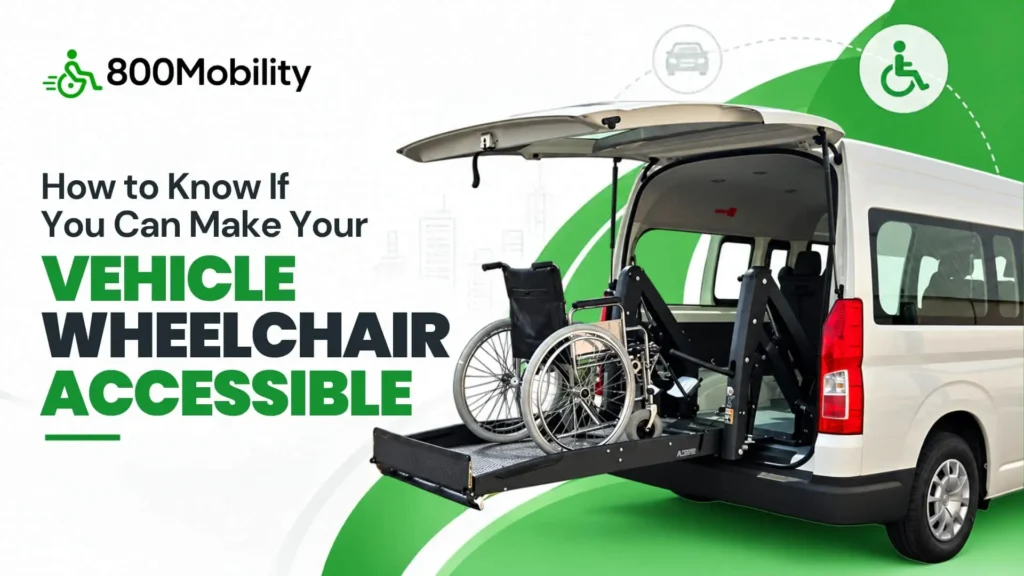
Mobility limitations can make everyday travel more challenging, particularly for wheelchair users who need to transfer into and out of a vehicle. Making a vehicle wheelchair accessible can improve ease of access and make travel more convenient for wheelchair users and their loved ones.
Many vehicles can be adapted for wheelchair access, but the right solution depends on several factors. These include the type and size of the vehicle, the size and weight of the wheelchair, available interior space, and the accessibility equipment required. Before modifying a vehicle, it is important to assess these factors to determine which solution is suitable.
Check Whether Your Vehicle Has Enough Space for Wheelchair Access
Adequate space is essential for safe and convenient wheelchair access. Start by taking accurate measurements of the vehicle’s entry points, including door height and width. These measurements can help determine whether the wheelchair can pass through the entrance comfortably.
You should also measure the available interior space, including headroom, legroom, and the area required for the wheelchair. The amount of space needed depends on whether the wheelchair user will transfer to a vehicle seat or remain seated in the wheelchair during travel.
Consider the Type and Size of Your Wheelchair
The type and dimensions of the wheelchair are important when determining whether a vehicle can be adapted for wheelchair access. Measure the wheelchair’s width, height, length, and weight, then compare these measurements with the vehicle’s available entry and storage space.
A folding wheelchair may be easier to store inside a vehicle because it requires less space when folded. However, accessibility requirements vary depending on whether the wheelchair is manual or powered and whether the user will remain seated in it during travel.
The vehicle and accessibility equipment should also be capable of supporting the combined weight of the wheelchair and its user within the applicable weight limits.
Identify Where the Wheelchair User Will Enter the Vehicle
Choosing the right entry point is another important consideration. Depending on the vehicle and the user’s mobility needs, access may be provided through a rear door, side door, or transfer into a vehicle seat.
The vehicle’s door configuration and available entry space can affect which accessibility equipment is suitable. For example, a narrow entrance may make wheelchair access more difficult than a wider entry point.
Identifying the most suitable access point before selecting equipment can help ensure that the proposed solution is compatible with the vehicle and supports a smoother transfer.
Determine Which Wheelchair Accessibility Equipment May Fit Your Vehicle
Different vehicles and mobility needs require different accessibility solutions. Depending on the situation, options may include:
- Wheelchair ramps: Provide a sloped path between the ground and vehicle entrance, allowing a wheelchair to move in and out of the vehicle.
- Wheelchair lifts: Raise a wheelchair and its user between the ground and the vehicle when a ramp is not suitable because of the height difference.
- Transfer/swivel seats: Can assist people who are able to make some physical movement when transferring between a wheelchair and the vehicle seat.
- Wheelchair loading equipment: Helps with lifting, loading, and storing a wheelchair when the user transfers into a vehicle seat.
Rather than choosing accessibility equipment first, assess the vehicle and wheelchair together. This helps determine which equipment is appropriate for the vehicle’s design and the user’s mobility requirements.
Check Vehicle Weight Capacity and Installation Requirements
Before installing wheelchair accessibility equipment, check whether the vehicle can safely support the additional weight. The overall load may include the wheelchair user, wheelchair, and accessibility equipment. The combined weight should remain within the vehicle’s specified payload capacity and the equipment’s applicable weight limit.
Ramps, lifts, and wheelchair loading equipment may also require suitable mounting points, structural support, and sufficient installation space. Because these requirements vary between vehicles, professional assessment and installation can help ensure that the equipment is properly fitted and safely used.
Get a Professional Vehicle Accessibility Assessment Before Modification
Gathering the correct information before modifying a vehicle can make the assessment process more straightforward. Keep details such as the vehicle’s make, model, and year, along with the wheelchair’s type, dimensions, and weight.
This information helps an accessibility provider evaluate the vehicle and wheelchair together and identify a suitable solution. Depending on the circumstances, this may include rear- or side-door access, a wheelchair ramp or lift, wheelchair loading equipment, or a transfer/swivel seat.
A professional assessment can help confirm compatibility between the vehicle, wheelchair, and proposed accessibility equipment before any modifications are made.
800 Mobility is a UAE-based provider of mobility solutions and vehicle accessibility equipment. We help customers explore suitable options based on their mobility needs and vehicle requirements. Contact 800 Mobility to discuss suitable solutions for making your vehicle more accessible.